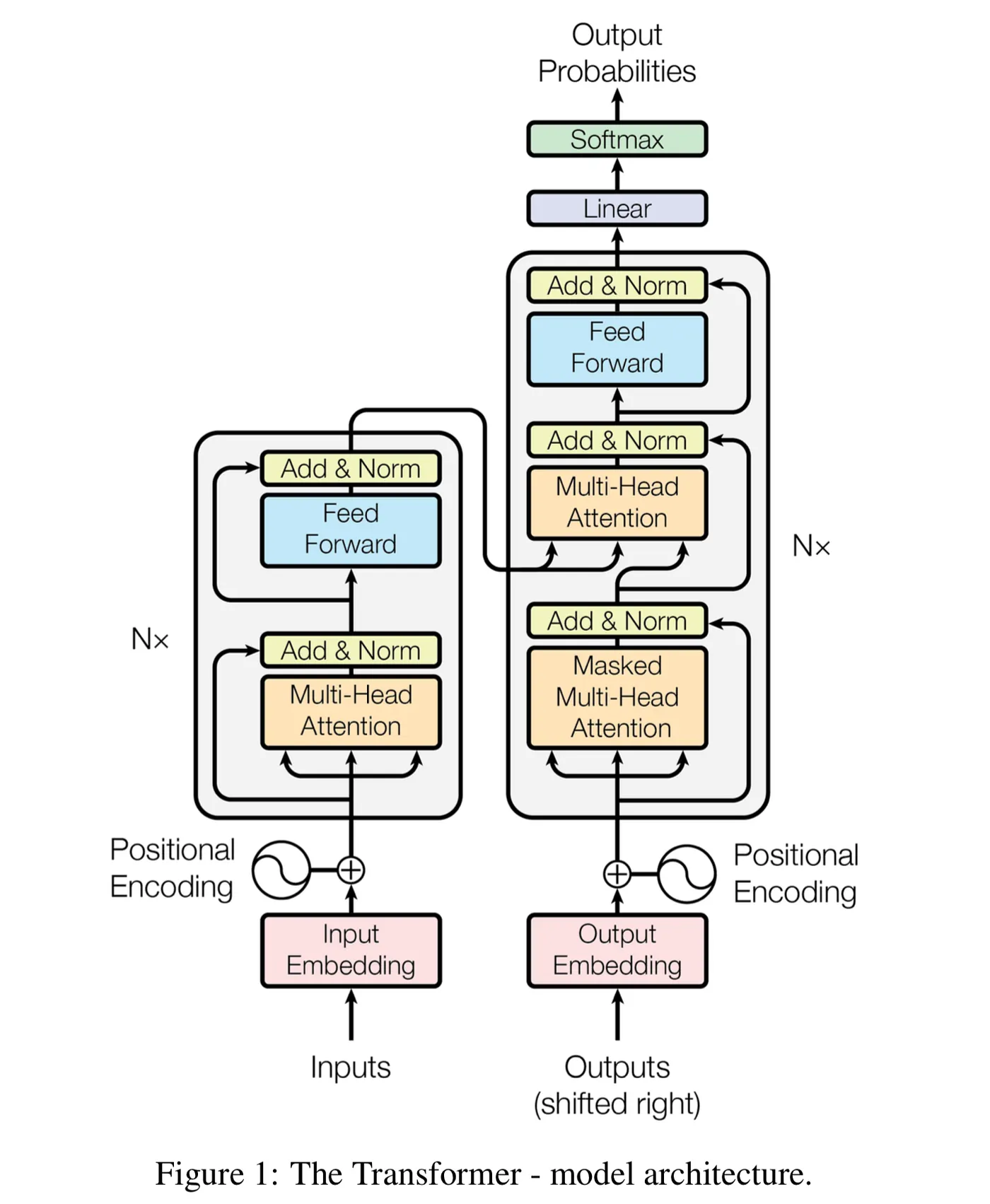
A Transformer block is the repeating unit that gives transformers their name. It combines attention, feed-forward processing, residual connections, and layer normalization into a single modular component that can be stacked to build deep networks.
- Block Architecture
- Residual Connections
- Layer Normalization
- Pre-LN vs Post-LN
- Step-by-Step Numeric Example
- Why These Components Work Together
- Code Implementation
- Visualization
- References
A single Transformer block consists of:
- Layer Normalization (Pre-LN) - Normalize before attention
- Multi-Head Self-Attention - Tokens communicate
- Residual Connection - Add original input back
- Layer Normalization (Pre-LN) - Normalize before FFN
- Feed-Forward Network - Per-position processing
- Residual Connection - Add back again
Input x
    │
    ├──────────────────────┐
    │                      │
    ▼                      │
LayerNorm                  │
    │                      │
    ▼                      │
Multi-Head Attention       │
(with causal mask)         │
    │                      │
    ▼                      │
+  ◄───────────────────────┘  (Residual: add input back)
    │
    ├──────────────────────┐
    │                      │
    ▼                      │
LayerNorm                  │
    │                      │
    ▼                      │
Feed-Forward Network       │
    │                      │
    ▼                      │
+  ◄───────────────────────┘  (Residual: add back)
    │
    ▼
Output
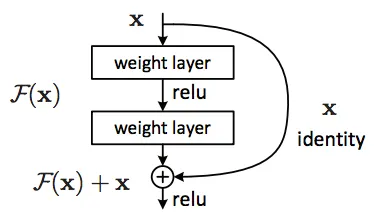
Residual connections (or skip connections) allow the input to "skip over" a layer and be added directly to the output.
# Without residual connection:
output = layer(input)

# With residual connection:
output = layer(input) + input- Gradient Flow: Gradients can flow directly through the skip connection, avoiding vanishing gradients
- Easier to Learn Identity: If a layer should do nothing, it just learns zero
- Enables Deep Networks: Without residuals, networks degrade with depth
Forward Pass:              Backward Pass (with residuals):

x ──────────┬─────────►    ◄───────────┬─────────── dL/dx
            │              gradient    │
            ▼              flows       │
         Layer             through     ▼
            │              BOTH       Layer
            ▼              paths       │
x + Layer(x)               dL/dx + dL/dLayer
            │                          │
            ▼                          ▼
         Output                    Input gradient
                                   always non-zero!
For a residual block
The gradient is:
Even if
Layer Normalization normalizes each sample independently across the feature dimension.
Where:
-
$\mu$ = mean across features:$\mu = \frac{1}{d}\sum_{i=1}^{d} x_i$ -
$\sigma^2$ = variance across features:$\sigma^2 = \frac{1}{d}\sum_{i=1}^{d} (x_i - \mu)^2$ -
$\gamma$ = learnable scale parameter -
$\beta$ = learnable shift parameter -
$\epsilon$ = small constant for numerical stability (typically 1e-5)
# Input: single position with 4 features
x = [2.0, 4.0, 6.0, 8.0]

# Step 1: Compute mean
mu = (2 + 4 + 6 + 8) / 4 = 5.0

# Step 2: Compute variance
var = ((2-5)² + (4-5)² + (6-5)² + (8-5)²) / 4
    = (9 + 1 + 1 + 9) / 4
    = 5.0

# Step 3: Normalize
std = sqrt(5.0 + 1e-5) ≈ 2.236
x_normalized = (x - mu) / std
             = [(2-5)/2.236, (4-5)/2.236, (6-5)/2.236, (8-5)/2.236]
             = [-1.34, -0.45, 0.45, 1.34]

# Step 4: Scale and shift (assuming γ=1, β=0)
output = x_normalized
       = [-1.34, -0.45, 0.45, 1.34]

# Verify: mean ≈ 0, std ≈ 1 ✓| Without Normalization | With Normalization |
|---|---|
| Activations can grow unbounded | Values stay in predictable range |
| Internal covariate shift | Stable statistics |
| Harder to train deep networks | Easier optimization |
| Learning rate sensitive | More robust |
x ──► Attention ──► + ──► LayerNorm ──► FFN ──► + ──► LayerNorm ──► output
        │          ▲                     │      ▲
        └──────────┘(residual)           └──────┘(residual)
x ──► LayerNorm ──► Attention ──► + ──► LayerNorm ──► FFN ──► + ──► output
  │                              ▲   │                       ▲
  └──────────────────────────────┘   └───────────────────────┘
              (residual)                    (residual)
| Aspect | Post-LN | Pre-LN |
|---|---|---|
| Gradient flow | Can accumulate before norm | Direct path through residuals |
| Training stability | Requires careful warmup | More stable |
| Final output | Already normalized | Needs final LayerNorm |
| Modern preference | Less common | Standard in GPT-2/3/4 |
Post-LN:
Gradient must pass through LayerNorm before reaching residual
─► Problem: gradients can become very small

Pre-LN:
Gradient flows directly through residual connection
─► Solution: consistent gradient magnitude
Let's trace through a complete Transformer block:
Embedding dimension: 4
Number of heads: 2
FFN hidden dimension: 8
Sequence length: 3
x = [
    [1.0, 2.0, 0.5, 1.5],   # Position 0
    [0.5, 1.0, 1.5, 2.0],   # Position 1
    [2.0, 0.5, 1.0, 1.5],   # Position 2
]
# Shape: (3, 4)For position 0: [1.0, 2.0, 0.5, 1.5]
mu = (1.0 + 2.0 + 0.5 + 1.5) / 4 = 1.25
var = ((1-1.25)² + (2-1.25)² + (0.5-1.25)² + (1.5-1.25)²) / 4
    = (0.0625 + 0.5625 + 0.5625 + 0.0625) / 4 = 0.3125
std = sqrt(0.3125) ≈ 0.559

norm_0 = [(1-1.25)/0.559, (2-1.25)/0.559, (0.5-1.25)/0.559, (1.5-1.25)/0.559]
       = [-0.45, 1.34, -1.34, 0.45]

# Similarly for other positions:
norm_1 = [-0.84, -0.17, 0.50, 1.51]  # Simplified
norm_2 = [1.17, -0.84, -0.50, 0.17] # Simplified(Using simplified attention for illustration)
# After attention with 2 heads:
attn_output = [
    [-0.30, 0.85, -0.70, 0.55],   # Position 0 attends to past
    [-0.50, 0.30, 0.10, 0.90],   # Position 1
    [0.20, -0.40, 0.60, 0.70],   # Position 2
]# Add original input back
x_1 = x + attn_output
# Position 0:
x_1[0] = [1.0, 2.0, 0.5, 1.5] + [-0.30, 0.85, -0.70, 0.55]
= [0.70, 2.85, -0.20, 2.05]
# Full result:
x_1 = [
[0.70, 2.85, -0.20, 2.05],
[0.00, 1.30, 1.60, 2.90],
[2.20, 0.10, 1.60, 2.20],
]# Normalize x_1 (showing position 0)
mu = (0.70 + 2.85 - 0.20 + 2.05) / 4 = 1.35
var = ... ≈ 1.35
std ≈ 1.16
norm_x1 = [
[-0.56, 1.29, -1.34, 0.60],
[-0.84, 0.10, 0.35, 1.39],
[0.42, -1.18, 0.07, 0.69],
]# Expand to 8 dims, GELU, compress back to 4
# (Simplified values)
ffn_output = [
[0.15, 0.40, -0.30, 0.20],
[0.10, 0.25, 0.35, 0.45],
[0.30, -0.15, 0.20, 0.25],
]# Add x_1 back
output = x_1 + ffn_output
output = [
[0.70+0.15, 2.85+0.40, -0.20-0.30, 2.05+0.20],
[0.00+0.10, 1.30+0.25, 1.60+0.35, 2.90+0.45],
[2.20+0.30, 0.10-0.15, 1.60+0.20, 2.20+0.25],
]
# Final output:
output = [
[0.85, 3.25, -0.50, 2.25],
[0.10, 1.55, 1.95, 3.35],
[2.50, -0.05, 1.80, 2.45],
]Position 0 through the block:
Input: [1.00, 2.00, 0.50, 1.50]
│
After Norm 1: [-0.45, 1.34, -1.34, 0.45]
│
After Attn: [-0.30, 0.85, -0.70, 0.55]
│
+ Residual: [0.70, 2.85, -0.20, 2.05]
│
After Norm 2: [-0.56, 1.29, -1.34, 0.60]
│
After FFN: [0.15, 0.40, -0.30, 0.20]
│
+ Residual: [0.85, 3.25, -0.50, 2.25]
│
Output ▼
| Component | Purpose | What Happens Without It |
|---|---|---|
| Attention | Token communication | No context understanding |
| FFN | Per-position processing | No non-linearity |
| Residual | Gradient flow, identity learning | Training fails for deep nets |
| LayerNorm | Stable activations | Exploding/vanishing activations |
LayerNorm → Stabilizes inputs to attention/FFN
     │
Attention → Gathers relevant information from context
     │
Residual → Preserves original information + new context
     │
LayerNorm → Stabilizes for next processing step
     │
FFN → Processes gathered information non-linearly
     │
Residual → Final fusion: original + context + processed
From src/transformer.py:
class TransformerBlock:
    """
    Single Transformer Decoder Block.

    Uses Pre-LayerNorm architecture (GPT-2 style):
    - LayerNorm before attention
    - Residual connection after attention
    - LayerNorm before FFN
    - Residual connection after FFN
    """

    def __init__(
        self,
        embedding_dimension: int,
        num_heads: int,
        ffn_hidden_dimension: int = None,
    ):
        self.embedding_dimension = embedding_dimension
        self.num_heads = num_heads

        # Layer norms
        self.attention_layer_norm = LayerNorm(embedding_dimension)
        self.ffn_layer_norm = LayerNorm(embedding_dimension)

        # Self-attention
        self.self_attention = MultiHeadAttention(
            embedding_dimension=embedding_dimension,
            num_heads=num_heads
        )

        # Feed-forward network
        self.feed_forward = FeedForwardNetwork(
            embedding_dimension=embedding_dimension,
            hidden_dimension=ffn_hidden_dimension,
        )

    def forward(
        self,
        input_tensor: np.ndarray,
        use_causal_mask: bool = True,
    ) -> np.ndarray:
        """
        Forward pass through the transformer block.

        Args:
            input_tensor: Shape (batch, seq_len, embedding_dim)
            use_causal_mask: Whether to use causal masking

        Returns:
            Output of same shape as input
        """
        # Cache for residual
        self._input_cache = input_tensor
        seq_len = input_tensor.shape[1]

        # Create causal mask
        mask = create_causal_mask(seq_len) if use_causal_mask else None

        # ============ Attention Sub-block ============
        # Step 1: Pre-attention layer norm
        normed = self.attention_layer_norm.forward(input_tensor)

        # Step 2: Self-attention
        attn_output = self.self_attention.forward(
            query=normed, key=normed, value=normed, mask=mask
        )

        # Step 3: Residual connection
        post_attention = input_tensor + attn_output

        # ============ FFN Sub-block ============
        # Step 4: Pre-FFN layer norm
        normed = self.ffn_layer_norm.forward(post_attention)

        # Step 5: Feed-forward network
        ffn_output = self.feed_forward.forward(normed)

        # Step 6: Residual connection
        output = post_attention + ffn_output

return outputclass LayerNorm:
"""
Layer Normalization.
Normalizes across the feature dimension:
y = gamma * (x - mean) / sqrt(var + eps) + beta
"""
def __init__(self, normalized_shape: int, epsilon: float = 1e-5):
self.normalized_shape = normalized_shape
self.epsilon = epsilon
# Learnable parameters, initialized to identity transform
self.gamma = np.ones(normalized_shape) # Scale
self.beta = np.zeros(normalized_shape) # Shift
def forward(self, input_tensor: np.ndarray) -> np.ndarray:
"""Normalize input tensor."""
self._input_cache = input_tensor
# Compute statistics across last axis (features)
mean = np.mean(input_tensor, axis=-1, keepdims=True)
variance = np.var(input_tensor, axis=-1, keepdims=True)
# Normalize
std = np.sqrt(variance + self.epsilon)
normalized = (input_tensor - mean) / std
# Scale and shift
output = self.gamma * normalized + self.beta
return output Transformer Block
┌────────────────────────────────────────────────────────────┐
│ │
│ Input x │
│ [batch, seq_len, embed_dim] │
│ │ │
│ ├──────────────────────────────────┐ │
│ │ │ │
│ ▼ │ │
│ ┌─────────────┐ │ │
│ │ LayerNorm │ │ │
│ └──────┬──────┘ │ │
│ │ │ │
│ ▼ │ │
│ ┌─────────────────────────┐ │ │
│ │ Multi-Head Self-Attn │ │ │
│ │ ┌─────────────────────┐ │ │ │
│ │ │ Head 1 │ Head 2 │...│ │ │ │
│ │ └─────────────────────┘ │ │ │
│ └──────────┬──────────────┘ │ │
│ │ │ │
│ ▼ │ │
│ [ + ] ◄─────────────────────┘ Residual │
│ │ │
│ ├──────────────────────────────────┐ │
│ │ │ │
│ ▼ │ │
│ ┌─────────────┐ │ │
│ │ LayerNorm │ │ │
│ └──────┬──────┘ │ │
│ │ │ │
│ ▼ │ │
│ ┌─────────────────────────┐ │ │
│ │ Feed-Forward Network │ │ │
│ │ Linear → GELU → Linear │ │ │
│ └──────────┬──────────────┘ │ │
│ │ │ │
│ ▼ │ │
│ [ + ] ◄─────────────────────┘ Residual │
│ │ │
│ ▼ │
│ Output │
│ [batch, seq_len, embed_dim] │
│ │
└────────────────────────────────────────────────────────────┘
              Input Embeddings + Positional Encoding
                              │
                              ▼
                   ┌────────────────────┐
                   │ Transformer Block 1│
                   └─────────┬──────────┘
                             │
                             ▼
                   ┌────────────────────┐
                   │ Transformer Block 2│
                   └─────────┬──────────┘
                             │
                             ▼
                   ┌────────────────────┐
                   │ Transformer Block 3│
                   └─────────┬──────────┘
                             │
                             ▼
                   ┌────────────────────┐
                   │ Transformer Block 4│
                   └─────────┬──────────┘
                             │
                             ▼
                       Final LayerNorm
                             │
                             ▼
                    Output Projection
Layer  What Changes                     Example (conceptual)
─────  ──────────────────────────────  ─────────────────────────────
Input: Raw token embeddings            "cat": [0.2, 0.4, 0.1, ...]
                                       "sat": [0.3, 0.1, 0.5, ...]

Block 1: Local patterns                "cat" learns it's near "sat"
└─► Attention finds immediate          "sat" learns it's a verb
    neighbors

Block 2: Syntactic relations           "cat" knows it's the subject
└─► Subject-verb connections           "sat" knows "cat" is doing it

Block 3: Semantic understanding        "cat" encodes "animal doing action"
└─► Meaning accumulates

Block 4: High-level representation     "cat" = full contextual meaning
└─► Ready for prediction               ready to predict next word
Run the transformer demo:
python -m src.transformerOr experiment in Python:
from src.transformer import TransformerBlock
import numpy as np

# Create a transformer block
block = TransformerBlock(
    embedding_dimension=128,
    num_heads=4,
    ffn_hidden_dimension=512
)

# Sample input
x = np.random.randn(2, 10, 128)  # batch=2, seq=10, dim=128

# Forward pass
output = block.forward(x, use_causal_mask=True)

print(f"Input shape: {x.shape}")
print(f"Output shape: {output.shape}")
print(f"Same shape? {x.shape == output.shape}")

# Verify residual connection effect
# If we set attention and FFN weights near zero,
# output should be close to input (identity)-
Original Transformer: Vaswani, A., et al. (2017). Attention Is All You Need
-
Pre-LN Analysis: Xiong, R., et al. (2020). On Layer Normalization in the Transformer Architecture
-
Deep Residual Learning: He, K., et al. (2015). Deep Residual Learning for Image Recognition
-
Layer Normalization: Ba, J., et al. (2016). Layer Normalization
-
This Repository: See src/transformer.py for
TransformerBlockandTransformerStackclasses.
Next Step: Now we understand individual blocks. Continue to 07 - GPTModel.md to see how everything assembles into a complete language model.