an extremely simple terminal-based password manager
pip
pip install pittuv
uv tool install pitt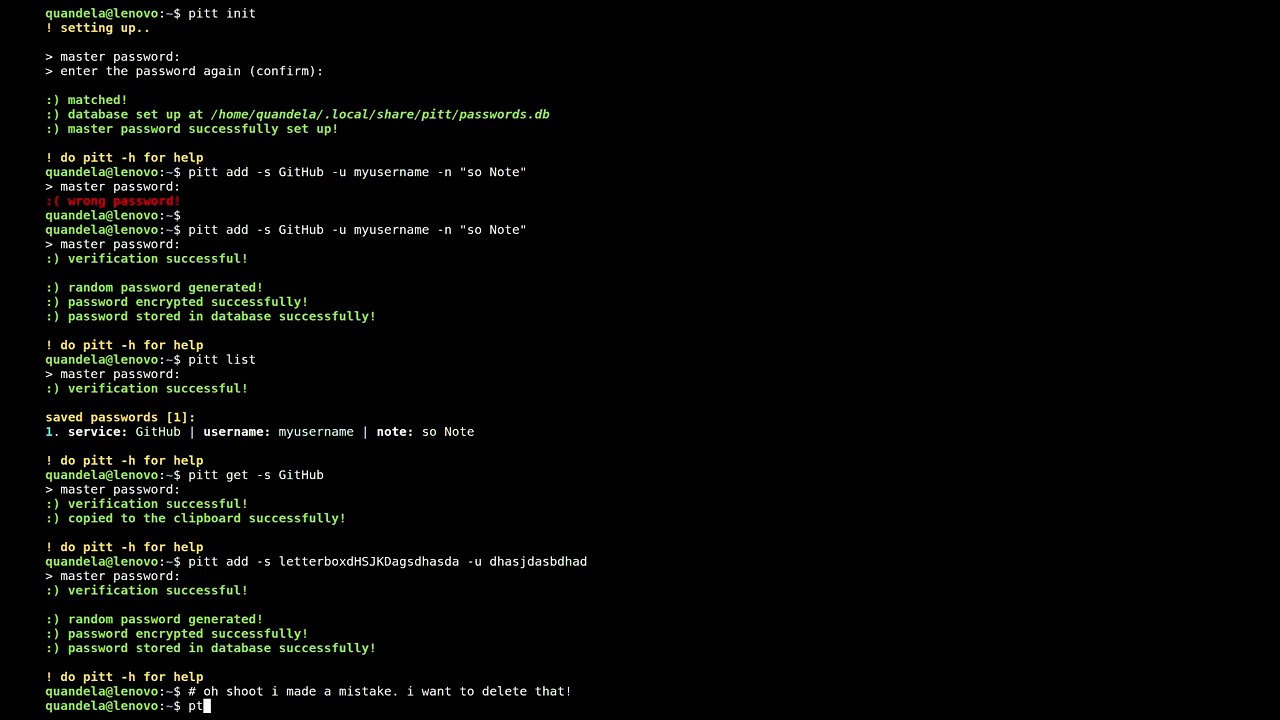
-
initializing the password manager:
- new:
pitt initand follow the instructions
- import from csv (exported pitt passwords):
pitt init -i /path/to/.csvand follow the instructions
- new:
-
adding a password:
- randomly generated password:
- you'd have to specify a service, username or a note that'll be attached with the newly generated password when saved.
pitt add -s service_example -u username_example -n "note example"
- custom password:
- you'd have to still specify one of the three things (username, service, note)
pitt add -s service_example -u username_example -n "note example" -c(note the added -c flag)
- randomly generated password:
-
deleting a password:
- you need to specify the service or username (can be both but cannot be the note) that is affiliated with the saved password you want to delete.
pitt del -s service_example -f(the -f or --force flag will disgard the 'are you sure' confirmations and straight up just deletes the password. use -f with caution)
-
getting a password:
- you need to specify the service or username (can be both) but cannot be the note that is affiliated with the saved password you want to get (copy to clipboard).
pitt get -s service_example
-
listing all the saved passwords' information:
pitt list(this will only list all the information that's attached to each password, not the passwords themselves.)
-
export all the saved passwords:
- interactive mode:
pitt exp
- manual mode:
pitt exp -p /path/to/wherever
- interactive mode:
this project is licensed under the MIT License - see the LICENSE file for details
inspired by: themohitnair's sfnx | (https://github.com/themohitnair/sfnx)
curated by me alongside some rubber ducks